
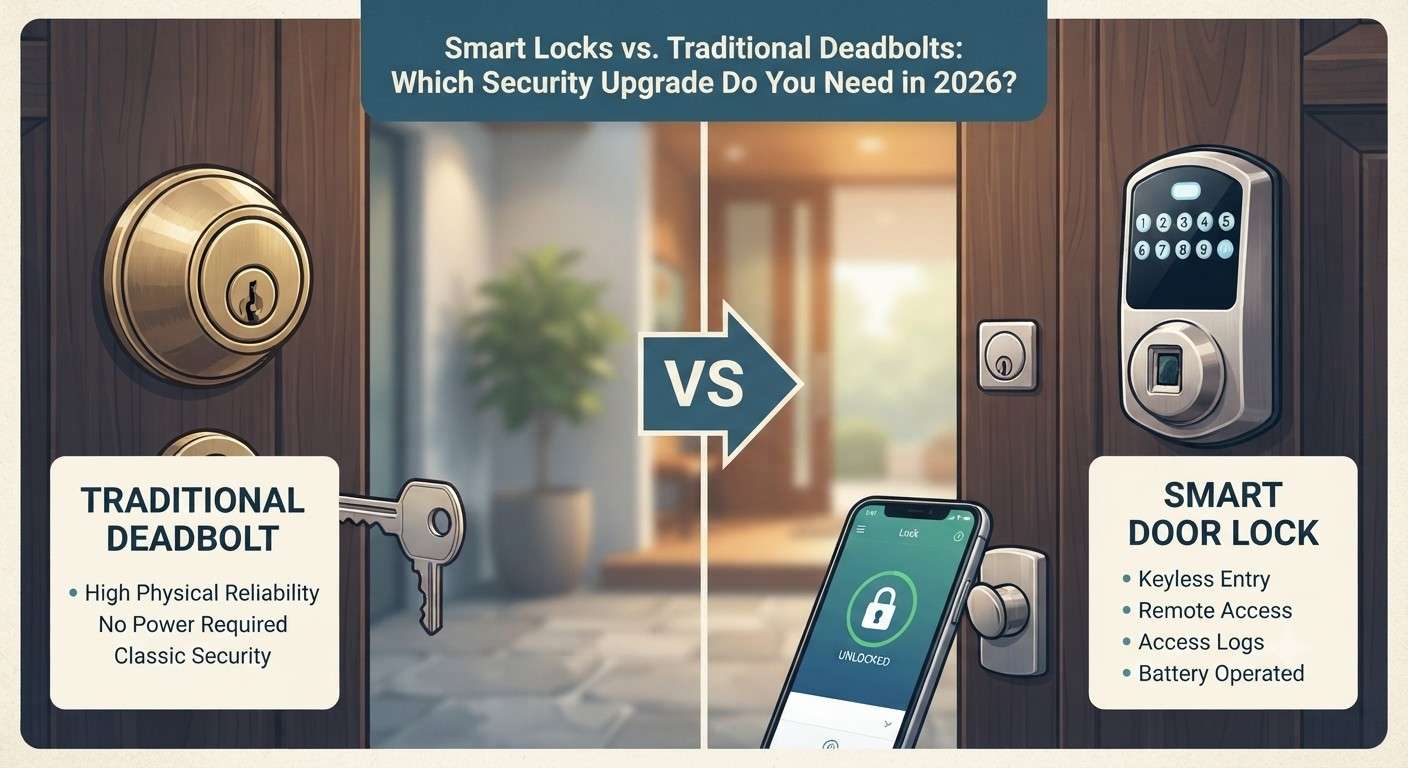
As we move through 2026, the debate between traditional mechanical locks and modern smart access systems has intensified. Home security is no longer just about a sturdy piece of metal; it is about balancing convenience, reliability, and digital peace of mind.
If you are currently deciding how to upgrade your home’s entry points, this guide breaks down the choice between traditional and smart technology based on current industry standards.
Understanding Your Options
1. Traditional Mechanical Locks
These remain the gold standard for pure physical reliability. A high-quality deadbolt, especially one with ANSI Grade 1 certification, provides massive resistance to physical force.
- Pros: No power required, immune to digital hacking, and highly cost-effective.
- Cons: No activity logs, physical keys can be lost or copied, and they offer no remote management capabilities.
- Best For: Low-traffic doors, secondary entrances, or homeowners who prefer a “set and forget” analog system.
2. Smart Door Locks
Smart locks have evolved significantly by 2026. They are no longer just “gadgets” but integrated security hubs. Features like biometric fingerprint recognition, temporary PINs for guests, and remote mobile app control are now standard.
- Pros: Keyless entry, real-time activity tracking, and the ability to revoke access instantly—ideal for rentals, home-sharing, or busy families.
- Cons: Requires battery management and carries a higher upfront cost.
- Best For: Main entryways, smart home enthusiasts, and those who frequently host guests or service providers.
Making the Right Choice: Factors to Consider
While individual results vary, experts generally recommend evaluating your specific lifestyle before making a purchase. Consider these three pillars:
- Access Control Needs: If you find yourself constantly hiding spare keys under mats or worrying about who has a copy of your key, a smart lock provides the digital audit trail you need.
- Environmental Resilience: If you live in a coastal or extreme-weather area, ensure any smart lock you choose has a high IP rating (IP65 or higher) to protect sensitive electronics from moisture and dust.
- Integration: Do you already have a smart home ecosystem? Look for locks that support the Matter protocol, which ensures your lock communicates seamlessly with other devices like cameras and lights.
How to Maximize Door Security
Regardless of the lock type, the “chain” is only as strong as its weakest link. To truly secure your home:
- Reinforce the Frame: A smart lock is useless if the strike plate can be kicked in. Use 3-inch screws that penetrate the wall studs.
- Choose the Right Material: For front doors, solid-core wood, steel, or fiberglass provide the best physical resistance.
- Regular Maintenance: For mechanical locks, lubricate with graphite powder (avoid oil-based lubricants that attract debris). For smart locks, keep firmware updated to ensure the latest security patches are active.
Frequently Asked Questions (FAQ)
Q: Are smart locks safe from digital hacking? A: Modern, reputable smart locks use advanced encryption protocols (similar to banking apps). While no system is 100% impenetrable, the risk of a “digital break-in” is significantly lower than the risk of physical lock-picking or lost key duplication associated with traditional locks.
Q: What happens to a smart lock during a power outage? A: Most smart locks are battery-operated and function independently of your home’s Wi-Fi or electricity. Even if the internet goes down, your PIN or fingerprint will continue to work.
Q: Can I install a smart lock myself? A: Most smart locks are designed as “retrofits” that use your existing deadbolt bore hole. If you are comfortable using a screwdriver, you can typically install one in under 30 minutes.