
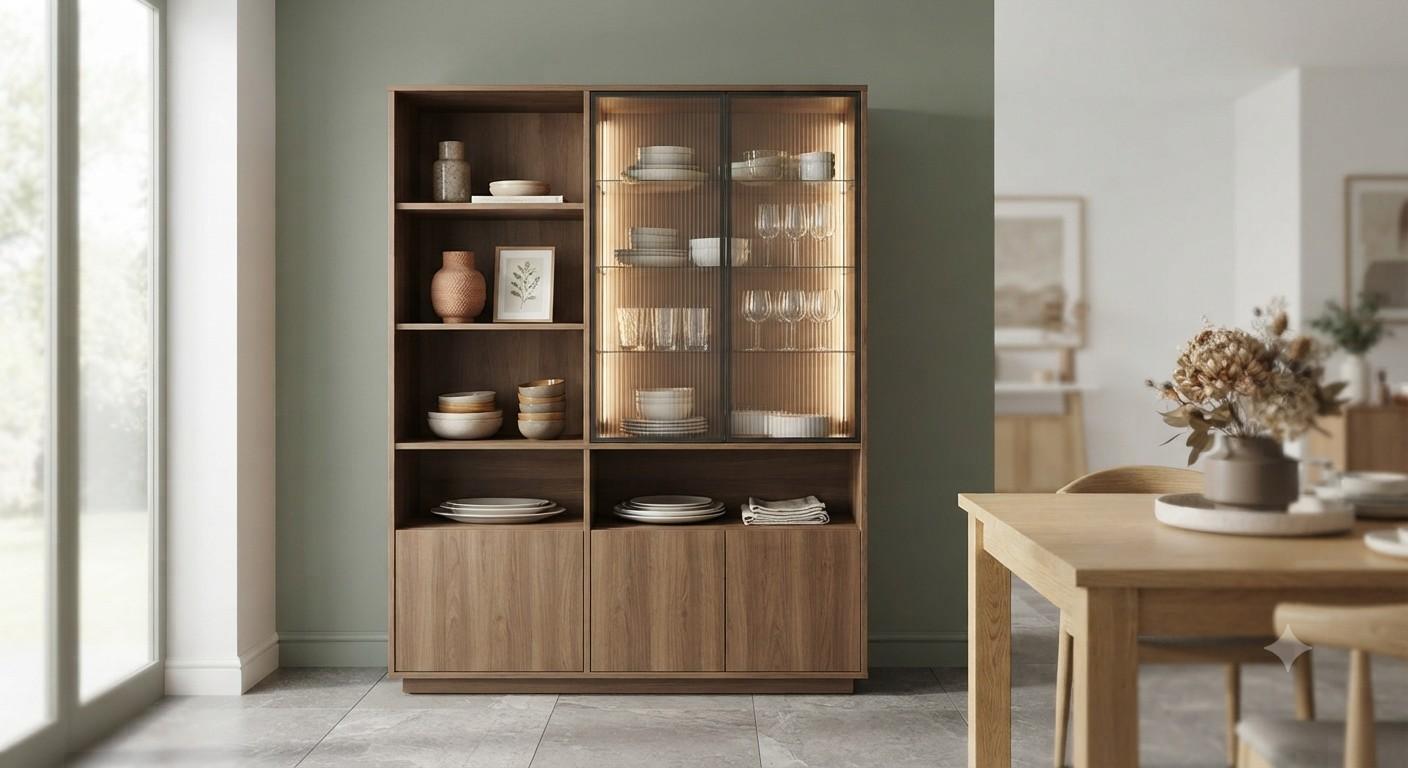
Choosing the Perfect Crockery Cabinet: A Comprehensive 2026 Guide
The kitchen is the heart of the home, but the dining room or lounge often serves as its soul—a place where memories are shared over dinner. A crockery cabinet is more than just a storage unit; it is a display piece that elevates your interior decor.
As we move further into 2026, home design is shifting toward “warm minimalism” and functional elegance. Whether you are aiming to store heirloom china or organize everyday dinnerware, finding the right piece requires balancing aesthetics with practicality.
2026 Design Trends: The Shift to Warmth
The stark white and grey kitchens of the early 2020s are fading. In 2026, homeowners are gravitating toward earthy neutrals and natural textures.
- Warm Palettes: Expect to see cabinetry in mushroom, stone, terracotta, and soft olive green. These shades create a calming, grounded atmosphere.
- Ribbed and Fluted Details: Texture is the hero of 2026. Fluted glass doors on crockery cabinets provide a subtle, elegant way to hide clutter while still showcasing your glassware.
- Integrated Lighting: Soft LED strips inside cabinets are no longer just for luxury kitchens. They are now a staple for highlighting ceramics and glassware, creating an inviting glow in the dining area.
Modern vs. Traditional: Which Style Fits Your Space?
Deciding between a modern or traditional cabinet often comes down to your home’s existing architecture.
The Modern Crockery Cabinet
Modern designs prioritize clean lines and handleless shutters. If you live in a compact apartment or a contemporary home, this style is ideal for maintaining an open, airy feel.
- Key Features: Flat-panel doors, matte laminates, and space-saving, wall-mounted configurations.
- Best For: Minimalist interiors where you want the cabinet to blend seamlessly into the wall.
The Traditional Crockery Cabinet
Traditional pieces offer timeless warmth, characterized by rich wood grains, crown moldings, and glass-fronted displays.
- Key Features: Natural oak or walnut finishes, ornate hardware, and raised-panel doors.
- Best For: Larger dining rooms or farmhouse-style homes where you want the cabinet to act as a statement focal point.
Factors to Consider Before You Buy
Before falling in love with a design, assess the functionality of the unit. A beautiful cabinet that doesn’t fit your routine will quickly become a source of frustration.
- Storage Needs: Do you need space for bulky serving platters or just everyday cups? Look for units with adjustable shelving.
- Floor vs. Wall-Mounted: For small homes, wall-mounted units save valuable floor space. For larger rooms, a free-standing, floor-to-ceiling unit offers maximum capacity.
- Maintenance: High-gloss finishes are stunning but show fingerprints easily. If you have a busy household, a matte or wood-grain finish is more forgiving.
Practical Tips for Organizing Your Crockery
An organized cabinet is a joy to use. Follow these steps to maximize your storage:
- Layering: Place larger plates at the back and smaller items like bowls or mugs at the front to create a visual effect that lets you see everything.
- Use Risers: Acrylic or wooden risers help you utilize vertical space, ensuring you don’t have to move a stack of plates to reach your favorite mug.
- Personal Touches: Don’t be afraid to mix in decorative items. A small vase, a framed photo, or a unique souvenir between your plates makes the unit feel like a part of your life.
Frequently Asked Questions (FAQ)
1. What is the best crockery cabinet for a small living room?
For small spaces, a wall-mounted unit with glass-front doors is ideal. It clears the floor space, making the room look larger, while the glass allows light to pass through, reducing the visual weight of the furniture.
2. Should I choose open shelves or closed cabinets?
It depends on your cleaning habits! Open shelving is trendy and excellent for display, but it requires frequent dusting. Closed cabinets—especially those with fluted glass—provide the best of both worlds: a display area that stays protected from dust.
3. How do I maintain a wooden crockery cabinet?
To keep wood looking its best, avoid harsh chemicals. Use a soft, microfiber cloth for regular dusting, and apply a high-quality wood wax or oil once or twice a year to maintain the luster and prevent the wood from drying out.
4. What is the most durable material for a crockery cabinet?
Plywood with a laminate finish is generally the most durable and easy to maintain. If you want a luxurious look, solid wood is excellent but requires more care regarding humidity levels in the kitchen or dining room.