
Cooking should be a creative and rewarding experience, yet for many, it often feels like a race against the clock. If you find yourself constantly battling time while preparing meals, you aren’t alone. The secret isn’t necessarily cooking faster; it is about cooking smarter. By refining your routine, you can reclaim hours in your week.
In this guide, we explore actionable, high-efficiency strategies to optimize your culinary space. These techniques are based on modern kitchen management principles designed to reduce friction and eliminate unnecessary movement.
The Art of “Mise en Place”
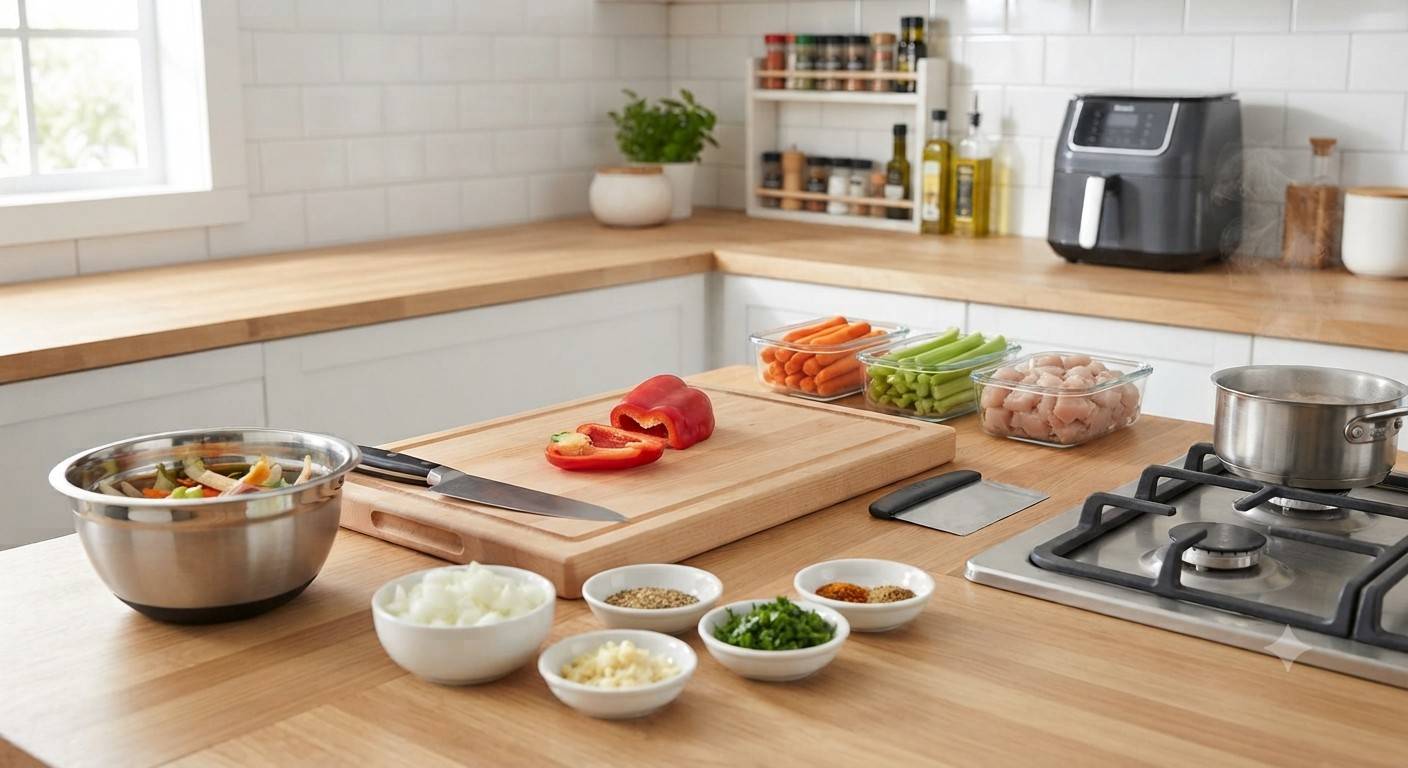
The foundation of any professional chef’s speed is mise en place—a French term meaning “everything in its place.” Before you turn on the stove, ensure all your ingredients are chopped, measured, and ready.
- Prep Before Heat: Never start cooking while still chopping. Having bowls of pre-measured spices and prepped vegetables removes the panic of “rushing to beat the burn.”
- Tool Accessibility: Keep your most-used knives and spatulas within an arm’s reach of your workspace.
Optimize Your Cutting Board Workflow
Many home cooks waste time by cutting one vegetable, moving it, and then cleaning the board.
- The Batch Method: Designate one side of the board for produce and one for raw proteins to avoid cross-contamination and constant washing.
- Use a Bench Scraper: A simple bench scraper acts as an extension of your hand. It allows you to clear the board in one motion, saving seconds that add up to minutes.
Master the “Clean-As-You-Go” Mindset
A cluttered workspace is the primary enemy of speed. If your counter is covered in debris, your focus drops and your time increases.
- The “Trash Bowl”: Keep a large bowl on the counter for scraps. Instead of walking to the bin every minute, discard scraps instantly.
- Soak Immediately: If you use a bowl or pot, fill it with hot, soapy water immediately after emptying it. By the time you sit down to eat, the scrubbing is already half-done.
Strategic Appliance Utilization
In 2026, technology is your best ally in the kitchen.
- Multi-Tasking Appliances: Utilize air fryers or pressure cookers for side dishes while the stovetop is occupied. This allows for parallel processing rather than sequential cooking.
- Preheat Rituals: Always turn your oven or air fryer on the moment you begin your prep. By the time your ingredients are ready, the appliance is at the perfect temperature.
Ingredient Prep Shortcuts (Pro Tips)
- Garlic and Onion Hacks: Buy pre-peeled garlic cloves or chop onions in bulk at the start of the week and store them in airtight containers.
- Frozen Herbs: Use high-quality frozen herbs to maintain flavor without the time-consuming process of washing and finely chopping fresh stalks daily.
For more on professional knife safety and prep techniques, visit Culinary Institute of America’s Resource Library.
Simplify Your Serving Strategy
Often, we lose time in the “plating” phase. Simplify by serving family-style directly from the cookware (if safe/aesthetic) to reduce the number of items that need washing later.
Efficiency Checklist for Daily Meals
| Task | Traditional Time | Optimized Time |
| Vegetable Prep | 15 mins | 8 mins |
| Cleaning | 20 mins | 10 mins |
| Cooking | 45 mins | 35 mins |
Frequently Asked Questions (FAQ)
Q1: How can I speed up meal prep without losing nutritional value?
Focus on simple, whole-food recipes. Using methods like sheet-pan roasting preserves nutrients while requiring minimal active effort compared to complex sauces or sautéing.
Q2: Is “clean-as-you-go” really worth the extra effort?
Absolutely. It reduces mental fatigue and prevents the dreaded “post-dinner cleanup” blues, making the entire cooking process more sustainable in the long run.
Q3: Which kitchen gadget is actually a time-saver?
A sharp, high-quality chef’s knife is the single best investment. A dull knife makes prep twice as hard and slow. A food processor is a close second for bulk chopping tasks.
Q4: Can I store prepped ingredients for long?
Yes, most vegetables can be prepped 2-3 days in advance if stored in airtight containers with a paper towel to absorb excess moisture. Always prioritize freshness for leafy greens.
Disclaimer: These tips are based on current culinary best practices. Always prioritize food safety, especially regarding temperature control and cross-contamination prevention.