
In 2026, the digital landscape has evolved significantly. For parents, the question is no longer “if” a child should have a mobile phone, but rather “how” to manage that presence in a way that protects their development while allowing them to reap the benefits of the digital age.
If you are struggling to find a balance between digital connectivity and offline life, you are not alone. This guide focuses on actionable strategies to manage mobile usage effectively.
The Reality of Mobile Use in 2026
Research indicates that children now spend an average of 23 hours per week online. While this connectivity is essential for social integration and learning, it brings a dual reality. Understanding the nuance between constructive engagement and passive consumption is the first step toward healthy parenting in the digital era.
The Benefits: Why Connectivity Matters
- Safety and Communication: A mobile phone provides peace of mind, allowing children to stay in touch with family during after-school activities.
- Educational Access: From language apps to STEM-focused platforms, smartphones can serve as powerful supplemental learning tools.
- Social Connection: For many adolescents, digital platforms are the primary space for maintaining friendships and discovering communities of interest.
The Risks: What Parents Should Monitor
- Digital Overload: Excessive screen time is linked to sleep disruption and reduced physical activity.
- Inappropriate Content: Exposure to misinformation, unmoderated social media, or harmful online trends remains a primary concern for guardians.
- The ‘Passive’ Trap: When a child uses a phone for hours of mindless scrolling, they lose opportunities for creative play, which is critical for cognitive development.
Managing Screen Time: A ‘Low-Stress’ Framework
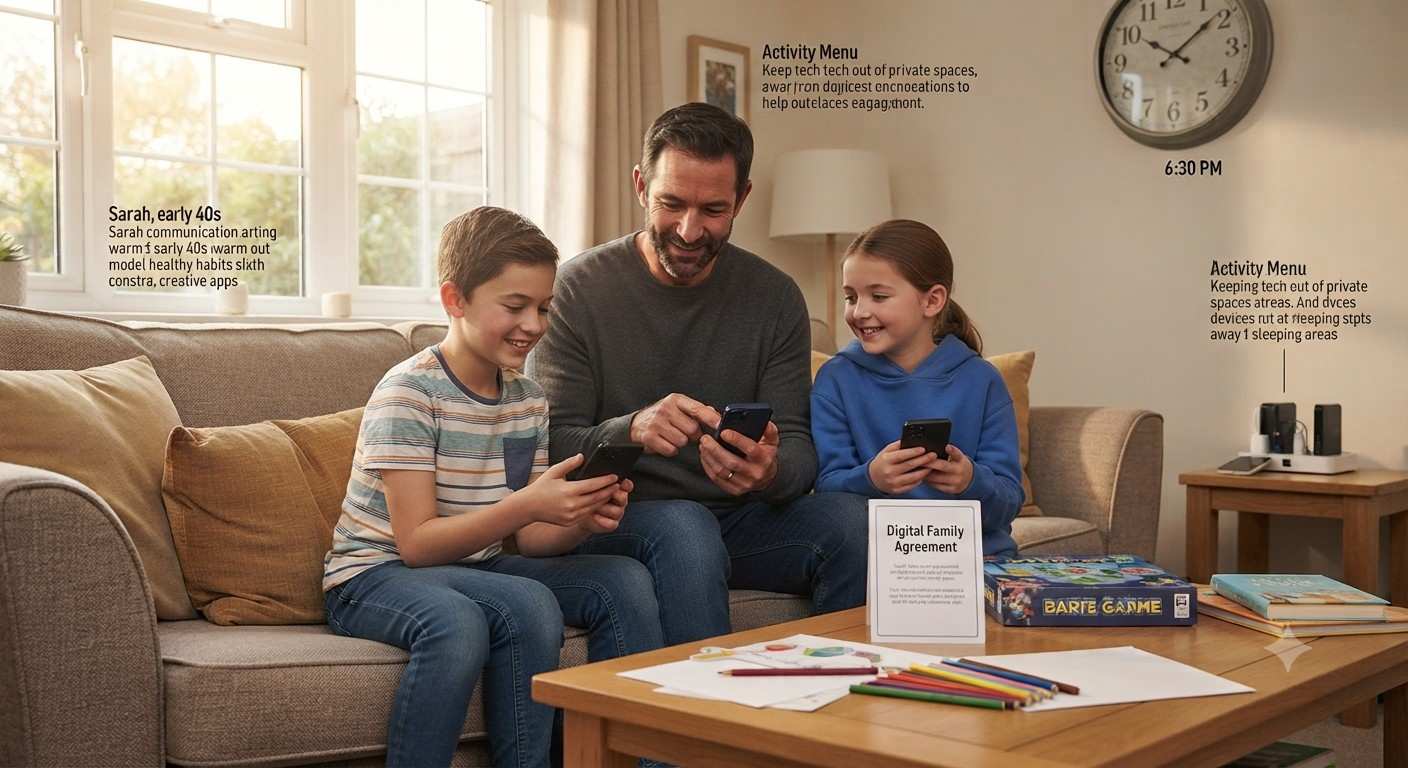
Instead of imposing rigid, impossible bans, consider a “Digital Family Agreement” approach. This shifts the dynamic from parental control to shared responsibility.
1. Establish ‘Tech-Free’ Zones
Create physical boundaries in your home. Common strategies include:
- The Bedroom Rule: Keep all devices out of the bedroom at night. This ensures that sleep quality is not compromised by late-night blue light exposure.
- Mealtime Connection: Designate the dining table as a device-free zone to encourage face-to-face conversation.
2. The ‘Activity Menu’ Strategy
Children often reach for their phones out of boredom rather than necessity. Create a pre-approved list of non-screen activities—such as reading, indoor crafts, or physical exercise—that they can choose from when they feel the urge to pick up a device.
3. Leverage Built-in Parental Tools
You don’t need expensive software to start. Most devices in 2026 come with robust, built-in features:
- Google Family Link: Ideal for managing app downloads and setting daily usage limits.
- Apple Screen Time: Excellent for tracking app-specific usage and scheduling “downtime.”
Proactive Communication: How to Talk About Safety
The most effective filter is your child’s own judgment. To build digital resilience:
- Encourage Curiosity: Ask them about the games or apps they enjoy. If they feel comfortable sharing, they are more likely to come to you if they encounter something uncomfortable online.
- Discuss Digital Footprints: Explain early on that what is posted online often remains there indefinitely.
- Model Healthy Habits: Children learn by observing. If you spend your dinner time on your phone, they will mimic that behavior. Show them what a healthy balance looks like by prioritizing offline time yourself.
Conclusion
Managing mobile phone use is not a one-time task; it is an ongoing process of adjustment as your child matures. By focusing on open communication, logical boundaries, and meaningful offline alternatives, you can help your child navigate the 2026 digital landscape safely and confidently.
Remember: The goal is not to eliminate technology, but to ensure that technology serves your child’s development rather than hindering it.