When news of a disease outbreak hits the headlines, our immediate thoughts turn to physical health: washing hands, wearing masks, and avoiding crowded spaces. However, beneath our conscious awareness, a powerful evolutionary mechanism is triggered. Psychological research reveals that infectious disease threats do not just threaten our bodies—they radically alter our minds, political beliefs, and social behaviors.
From the COVID-19 pandemic to localized outbreaks of Ebola or hantavirus, media reports of pathogens activate what psychologists call the “behavioral immune system.” This psychological defense mechanism can drive harsher moral judgments, increase social conformity, and even fuel xenophobia.
Understanding the psychological impact of pandemics, how fear of disease changes human behavior, and the deep connection between pathogen disgust and political ideology helps explain why society fractures during a health crisis.
What is the Behavioral Immune System?
The biological immune system is incredibly sophisticated. When a virus or bacteria enters the body, an army of white blood cells, macrophages, and antibodies mobilizes to destroy the invader. However, fighting an infection requires a massive amount of metabolic energy, leaving the body physically depleted.
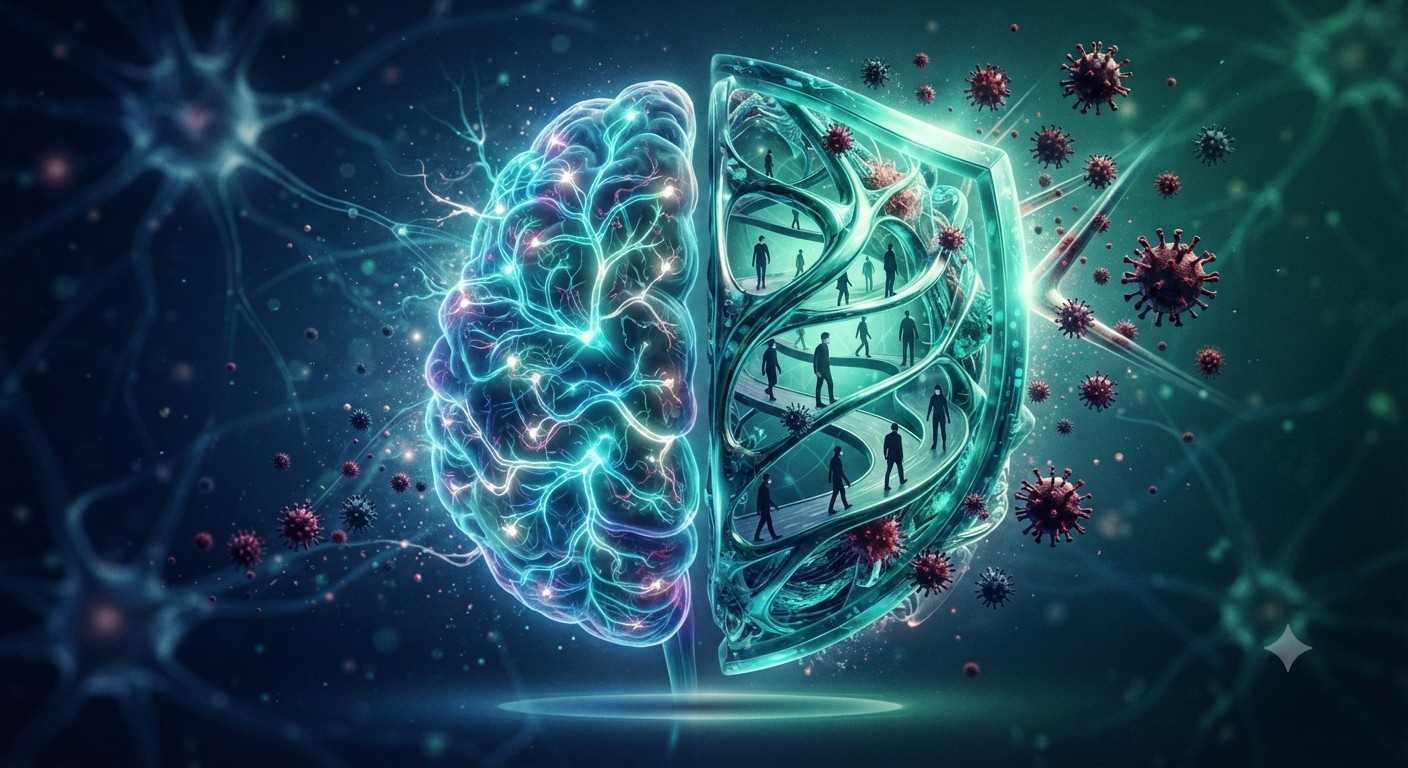
To save energy and protect us from falling ill in the first place, humans evolved a first line of psychological defense: the behavioral immune system. Coined by Mark Schaller at the University of British Columbia, this system refers to a suite of unconscious psychological responses designed to detect the presence of pathogens in the immediate environment and trigger behaviors to avoid them.
Disgust: The Primary Trigger
The most primal tool of the behavioral immune system is disgust. We feel an instinctive revulsion toward things that carry a high risk of contamination—spoiled food, open wounds, bodily fluids, and organic waste. This visceral reaction keeps us safe from dangerous bacteria and parasites.
However, the behavioral immune system does not stop at physical avoidance. Because human beings are deeply social creatures who historically lived in close-knit tribes, this evolutionary defense system heavily interferes with how we interact with other people, how we police social norms, and how we view outsiders.
How Fear of Illness Drives Social Conformity
One of the most fascinating findings in pandemic psychology is that reminders of disease make people significantly more conformist. In ancestral times, human groups developed specific social norms and cultural rituals—such as hygienic food preparation, proper waste disposal, and avoiding contact with the dead—to mitigate the spread of local diseases. Anyone who violated these rules put the entire community at risk.
Consequently, when our brains perceive a disease threat, our subconscious mind demands strict adherence to social rules and herd behavior.
The Scientific Evidence Behind Disease-Induced Conformity
Several landmark psychological studies demonstrate how quickly human behavior shifts under the threat of illness:
- The Grading System Experiment: Mark Schaller conducted a study asking university students to vote on a proposed change to their school’s grading system. Students who were asked to recall a time they were physically sick right before voting were far more likely to conform to the majority opinion than those who were not.
- The Modern Art Study: Researchers at the University of Hong Kong asked participants to rate pieces of modern art alongside data showing how previous viewers had rated them. Before the evaluation, one group was exposed to graphic images of open wounds and maggots (triggering pathogen disgust). This group overwhelmingly followed the herd, changing their artistic opinions to match the crowd. Interestingly, a control group shown distressing images of car and train accidents—which cause fear but carry no threat of infection—did not display this heightened conformity.
When the behavioral immune system is active, independent thinking decreases, and the desire to “blend in” and follow the crowd skyrockets.
Pathogen Disgust and Harsh Moral Judgments
When people are worried about contamination, they do not just become more compliant—they also become highly judgmental and punitive toward others. The behavioral immune system acts as an aggressive moral policeman.
In psychological experiments, participants exposed to foul odors or reminders of illness judged non-violent moral transgressions much more harshly than usual. For example, individuals under a pathogen threat expressed severe moral outrage at unconventional or eccentric behaviors, such as a fictional couple engaging in safe but socially taboo sexual practices.
From an evolutionary standpoint, this hyper-vigilance makes sense. By fiercely policing the behavior of others, the group ensures that everyone takes the necessary precautions to contain a potential outbreak. However, in the modern world, this translates into an intolerance for creativity, eccentricity, and alternative lifestyles during a health crisis.
The Dark Side: Disease Threats, Xenophobia, and Immigration Attitudes
Perhaps the most troubling consequence of the behavioral immune system is its capacity to generate prejudice, tribalism, and out-group hostility.
Historically, different human populations developed localized immunity to specific pathogens. Contact with an outside group or a foreign tribe often meant exposure to novel diseases for which the local population had no natural defenses (a classic historical example being the devastating impact of European diseases on Native American populations).
As a result, the human brain evolved an unfortunate, subconscious mechanism: fear of contamination can decrease our trust in outsiders.
The Link Between Pandemics and Xenophobia
Research led by Lene Aarøe at Aarhus University in Denmark suggests that when the behavioral immune system is highly active, individuals unconsciously associate immigrants and foreigners with pathogens. This evolutionary glitch directly alters political opinions regarding borders, immigration policies, and international travel.
During the real-world outbreak of COVID-19, this psychological shift was heavily documented:
- The Italian Pandemic Survey: A study conducted by Giulia Fuochi at the University of Padova surveyed 685 Italians during the peak outbreak months of April and May 2020. The data revealed a direct correlation between an individual’s fear of contracting the virus and their negative attitudes toward minorities, immigrants, and foreign nationals. High fear of infection directly weakened their sense of shared human identity and global solidarity.
- Societal Fractures: Across the globe, real-world data from the pandemic highlighted widespread rises in interpersonal wariness, moral vigilance, xenophobia, and an overall shift toward conservative, protective political ideologies.
Why Pandemic Psychology Varies from Person to Person
While the theory of the behavioral immune system is robust, psychologists emphasize that human behavior is incredibly complex. A real-world pandemic is messy, and a single evolutionary mechanism cannot dictate every decision a person makes.
Our response to a disease outbreak depends on a delicate interplay of multiple factors:
- Perceived Vulnerability to Disease (PVD): Some individuals naturally have a higher baseline fear of germs and illness. These people show much stronger psychological shifts (higher conformity, greater out-group distrust) when reading the news than those with a low PVD.
- Socio-Cultural Factors: An individual’s education, profession, family background, and personality traits (such as openness to experience) play a massive role in buffering against unconscious biases.
- The Role of the Media: Constant exposure to sensationalized headlines about Ebola, hantavirus, or new respiratory variants keeps the behavioral immune system in a state of chronic activation, intensifying its psychological side effects.
Conclusion: Recognizing Our Psychological Glitches
The next time you read a distressing news report about a localized disease outbreak or a rising global health threat, take a moment to reflect on your subsequent thoughts.
Are you judging rule-breakers more harshly? Are you feeling a sudden wave of distrust toward outsiders or unfamiliar cultures?
The behavioral immune system served our prehistoric ancestors well in a world without antibiotics, sanitation, or modern medicine. But in the 21st century, this ancient software running on modern hardware can warp our brains, distort our politics, and fracture our communities. Recognizing this subtle psychological glitch is the first step toward preventing fear from compromising our collective humanity.