
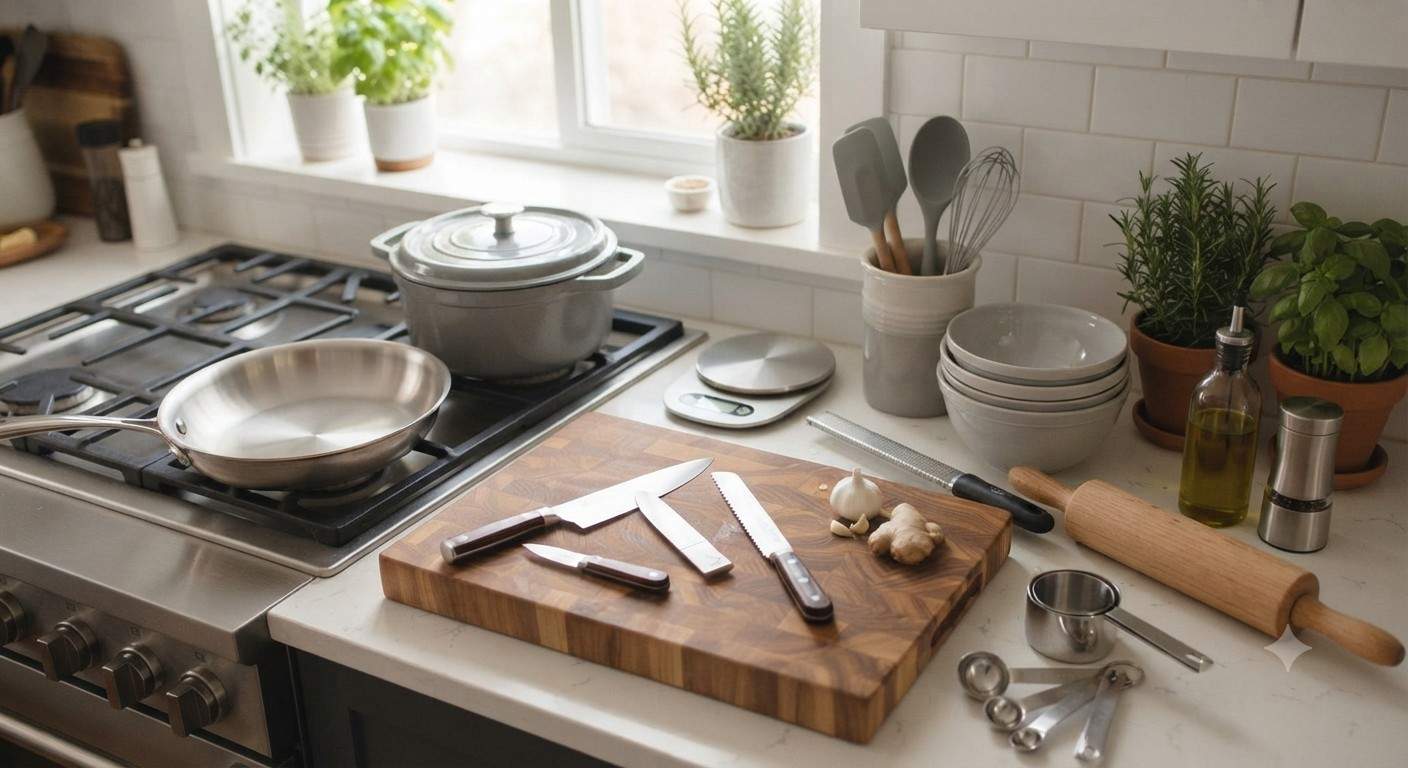
The kitchen is the heart of every home, but its functionality depends entirely on the tools you choose. As we move through 2026, the focus has shifted from owning “gadgets” to investing in high-quality, long-lasting best kitchen essentials for home that simplify meal preparation and improve results. Whether you are setting up your first apartment or upgrading an existing space, selecting the right equipment is about balance—durability, ergonomic design, and practical utility.
The Foundation: Why Quality Matters
Investing in quality culinary equipment is not just about aesthetics; it is about efficiency. High-quality materials like heavy-gauge stainless steel, food-grade silicone, and professional-grade ceramics distribute heat more evenly and resist wear and tear. When you use reliable tools, you spend less time struggling with equipment and more time focusing on the art of cooking.
Essential Cookware That Lasts
When selecting pots and pans, look for items that serve multiple purposes. A multi-clad stainless steel skillet is a kitchen workhorse. It offers superior heat retention and is naturally non-reactive, meaning it won’t alter the flavor of acidic foods like tomato sauces.
- Tri-Ply Construction: Look for pans that have an aluminum core sandwiched between stainless steel layers for optimal heat conduction.
- Versatility: A heavy-bottomed Dutch oven is indispensable. It can transition from searing meat on the stovetop to slow-cooking in the oven seamlessly.
Precision Cutting: The Knife Collection
You do not need a 20-piece knife block to be an effective cook. In fact, most professionals rely on just three primary knives to handle 95% of kitchen tasks.
The Core Trio
- Chef’s Knife (8-inch): This is your primary tool for chopping, slicing, and dicing vegetables and proteins. A balanced handle is critical here to prevent wrist fatigue.
- Paring Knife: Perfect for delicate work, such as peeling fruits or trimming small vegetables.
- Serrated Utility Knife: Essential for bread and soft-skinned produce like tomatoes, ensuring you don’t crush the delicate interiors.
Pro-Tip: Always choose a cutting board made of high-density wood or high-quality BPA-free plastic. Glass or marble boards should be avoided as they dull your knives quickly.
Smart Food Preparation Tools
Efficiency is the secret to a stress-free kitchen. Having the right prep tools means your workflow is uninterrupted.
- Digital Scale: Precision is the hallmark of a great cook. A digital scale provides consistent results, especially when baking, where ratios are more important than volume measurements.
- Silicone Utensils: High-heat resistant silicone spatulas are game-changers. They are gentle on non-stick surfaces and make cleaning mixing bowls effortless.
- Microplane Grater: Beyond just zesting citrus, these are excellent for finely grating garlic, ginger, and hard cheeses, allowing flavors to disperse evenly throughout a dish.
Maintenance and Care: Ensuring Longevity
The secret to making your kitchen items last for years lies in proper maintenance. Even the best equipment can fail if mistreated.
- Hand Washing: While many items are labeled “dishwasher safe,” high-quality knives and non-stick pans are best washed by hand. Harsh dishwasher detergents can strip coatings and dull blade edges over time.
- Seasoning: For cast iron or carbon steel, regular seasoning creates a natural, non-stick patina that actually improves with age.
- Proper Storage: Use magnetic strips or dedicated slots for knives to prevent them from colliding in a drawer, which is the most common cause of premature dulling.
Making the Right Choice for Your Space
When browsing for new additions to your kitchen, avoid the temptation of “unitaskers”—tools that perform only one function. Before making a purchase, ask yourself three questions:
- Does this replace a tool I already have or perform a task I do frequently?
- Is the material durable enough to withstand daily use?
- Is it easy to clean and store?
If the answer to these questions is positive, the tool will likely become a valuable part of your culinary journey.
Frequently Asked Questions (FAQ)
1. Should I buy a complete kitchen set or individual pieces? Generally, buying individual high-quality pieces is better. Sets often include items you may never use. By picking individual tools, you ensure every item serves a specific, useful purpose.
2. Is stainless steel better than non-stick cookware? Both have their place. Stainless steel is superior for searing and durability, while non-stick is convenient for delicate items like eggs or pancakes. Having both ensures you are prepared for any cooking method.
3. How often should I sharpen my kitchen knives? With regular home use, honing your blade with a steel before each use helps maintain the edge. A professional sharpening or using a high-quality manual sharpener should be done every 6 to 12 months, depending on frequency of use.
4. What is the most important tool for a beginner to invest in? A high-quality 8-inch chef’s knife is the single most important investment. It is the tool you will use for almost every preparation task, and a sharp, well-balanced knife makes cooking safer and more enjoyable.