In today’s economic climate, managing household expenses is a top priority for families across the UK and USA. As energy prices remain volatile, the goal isn’t just about “saving electricity”—it’s about optimizing your home’s performance to ensure your hard-earned money stays in your pocket.
While individual results vary, experts generally recommend a combination of small behavioral changes and strategic home upgrades to achieve long-term savings. This guide outlines actionable, data-backed strategies to help you gain control over your energy consumption this year.
1. The “Vampire Power” Audit: Stop Unnecessary Drain
Many appliances consume energy even when they aren’t in active use. This is often referred to as “phantom load” or “vampire power.” Electronics like gaming consoles, smart TVs, and desktop computers continue to draw electricity in standby mode.
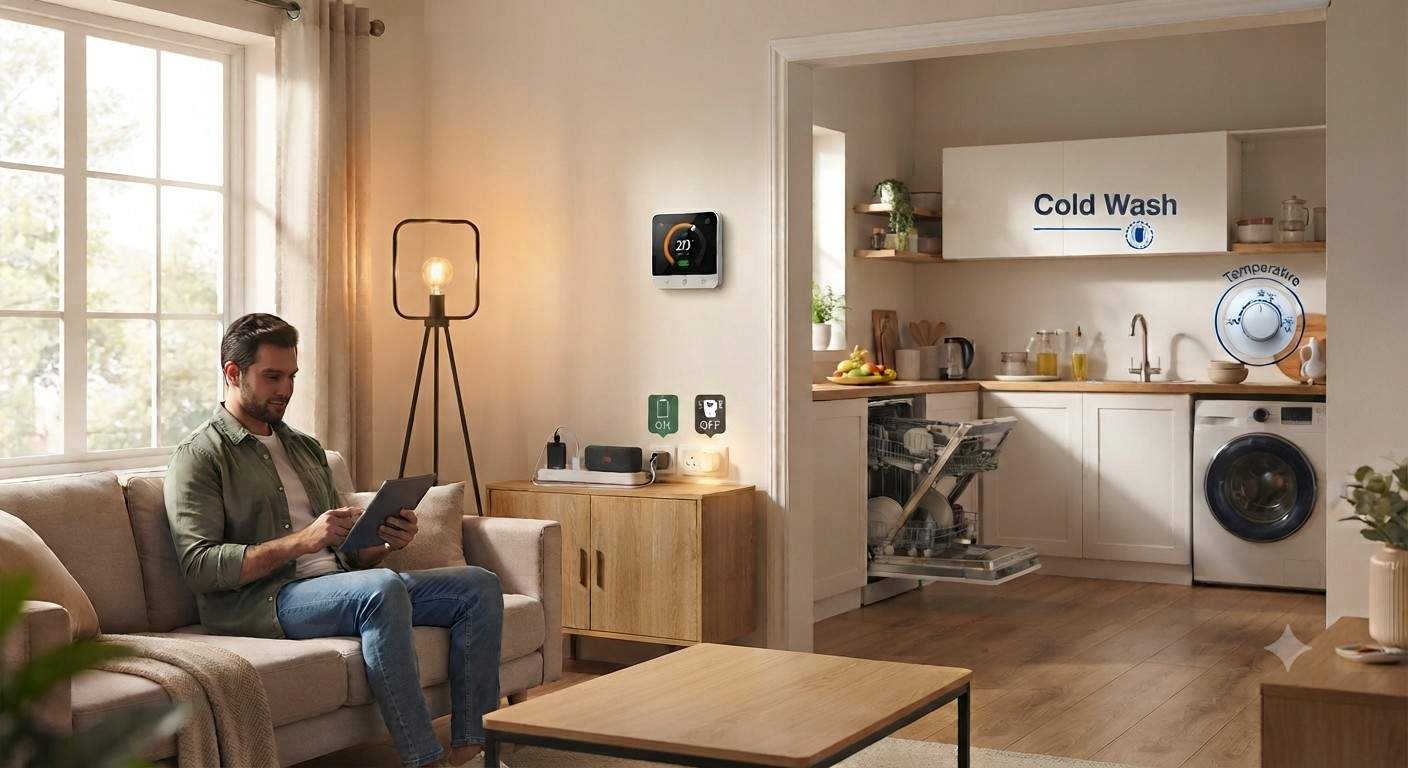
- Action: Use smart power strips to automatically cut power to peripheral devices when the main unit is turned off.
- Expert Recommendation: Before you go to sleep or leave for work, do a quick “unplug check” for chargers and small kitchen appliances that don’t need to be live 24/7.
- [Internal Link Opportunity: Link to your article on “Best Smart Home Gadgets for Energy Efficiency”]
2. Climate Control Optimization
Heating and cooling systems (HVAC) typically account for the largest portion of a household’s electricity bill. In 2026, the shift toward smart home technology makes it easier than ever to manage these costs without sacrificing comfort.
- Smart Thermostats: These devices learn your daily schedule and automatically adjust the temperature when you are away. Setting your thermostat just 1°C or 2°F closer to the outdoor temperature can reduce energy consumption by up to 10%.
- Draught-Proofing: Small gaps around window frames and door seals act as “energy leaks.” Investing in simple weatherstripping or caulk can prevent conditioned air from escaping, ensuring your HVAC system doesn’t have to work overtime.
- Maintenance: Regularly changing air filters is a non-negotiable task. A clogged filter restricts airflow, forcing the motor to run longer and consume more power.
3. Kitchen and Laundry Habits
Appliances like washing machines and dishwashers are massive energy consumers. Modifying how and when you use them can yield immediate results on your next bill.
- Wash on Cold: Most modern detergents are engineered to work perfectly in 30°C (approx. 86°F) water. Using the “Eco” setting or cold water cycles significantly reduces the energy required to heat water.
- Full Loads Only: Wait until your dishwasher or washing machine is full before running a cycle.
- Air-Dry Whenever Possible: While tumble dryers are convenient, they are energy-intensive. Whenever the weather permits, air-drying laundry is the most cost-effective solution.
Comparison: Traditional vs. Modern Energy Habits
| Practice | Traditional Approach | 2026 Expert Recommendation |
| Lighting | Incandescent/Halogen bulbs | Switch to LED (saves up to 80%) |
| Heating/Cooling | Constant temperature setting | Smart Thermostats with automated scheduling |
| Electronics | Leaving items on standby | Smart power strips to cut power |
| Appliances | Small, frequent loads | Full loads with Eco settings |
4. Long-Term Investments for Energy Independence
If you are planning home improvements for 2026 and beyond, focus on structural efficiency.
- Energy-Efficient Appliances: When an old appliance reaches the end of its life, replace it with an Energy Star-certified model. While the upfront cost is higher, the long-term operational savings are significant.
- Renewable Integration: Solar panels are becoming increasingly accessible. Depending on your location and roof orientation, generating your own electricity can drastically reduce your reliance on the grid and provide a buffer against future price hikes.
- External Authority: For specific appliance ratings and local incentive programs, consult the Energy Star (USA) or the Energy Saving Trust (UK) websites.
Frequently Asked Questions (FAQ)
Q: Does turning off lights actually save money?
A: Yes. While the power surge from flipping a switch is negligible, the cumulative energy wasted by leaving lights on in unoccupied rooms adds up. For rooms you won’t be in for more than a few minutes, it is best practice to turn them off.
Q: Is it cheaper to keep the heating on low all day or turn it off?
A: Most experts suggest that it is more energy-efficient to heat your home only when you are there to need it. Using a programmable thermostat allows you to heat the home just before you arrive, avoiding the “constant burn” of keeping it on all day.
Q: Are smart plugs really worth the investment?
A: If you have several electronics clustered together (like a home office or entertainment center), a smart power strip pays for itself within months by eliminating phantom energy consumption.
Q: What is the most effective way to start saving today?
A: Begin with the “low-hanging fruit”: replace your five most-used bulbs with LEDs, start washing clothes on cold, and audit your home for drafts around windows and doors.
Disclaimer: These tips are for informational purposes. Individual savings depend on your specific household size, appliance age, and regional energy pricing. Always consult with a professional electrician or HVAC technician before undertaking significant home modifications.