
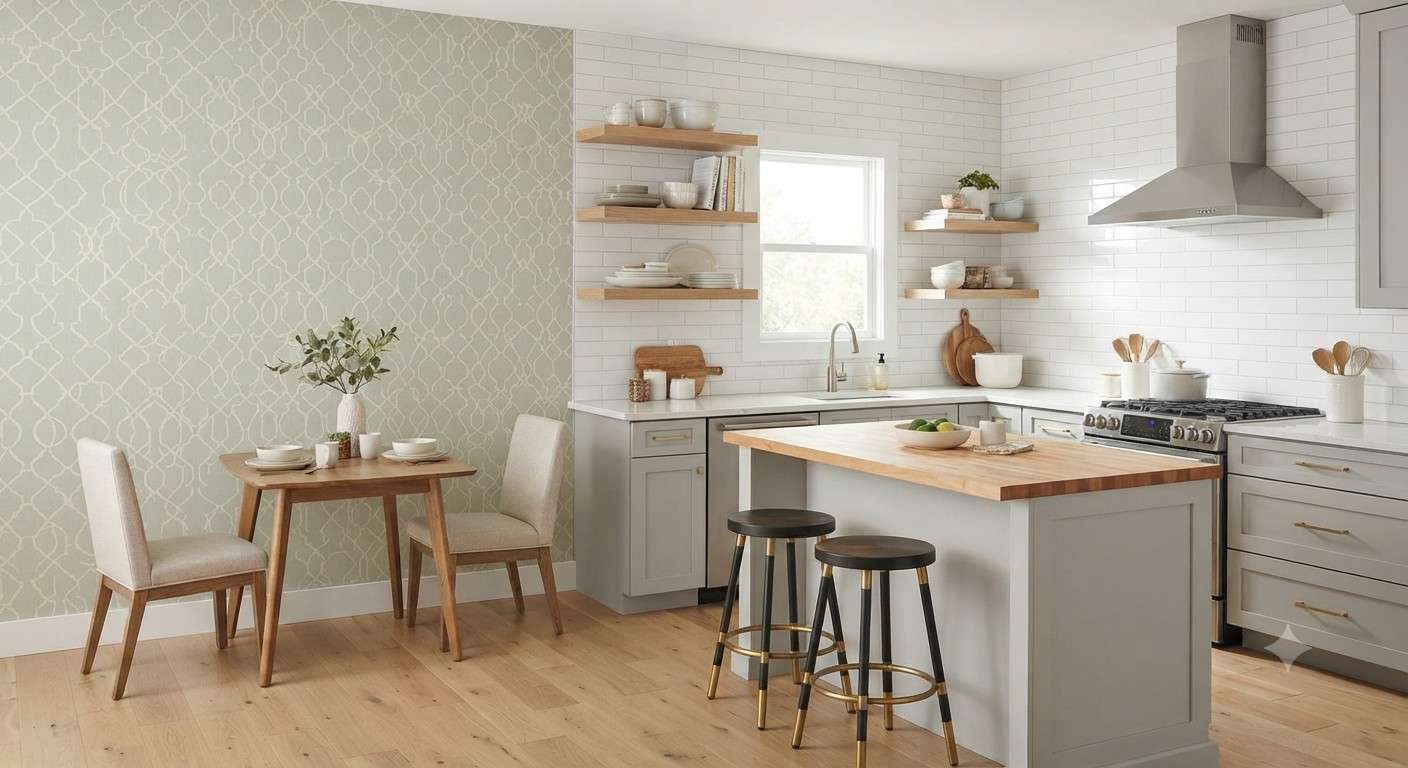
The kitchen is the heart of the home, but for years, it has been primarily dominated by paint or tiles. As interior design trends shift toward more personalized and textured spaces, many homeowners are rediscovering the charm and versatility of kitchen wallpaper. Far from the delicate papers of the past, modern options are designed to handle the unique demands of a culinary environment.
Whether you want to create a dramatic focal point or add a touch of warmth to a minimalist space, choosing the right wall covering requires a blend of aesthetic vision and practical planning.
Why Choose Wallpaper for Your Kitchen?
While paint is durable, it often lacks the intricate detail and personality that high-quality wallpaper can provide. Wallpaper offers a level of depth—through texture, patterns, and sheen—that can instantly transform a sterile cooking space into a welcoming area.
The primary benefit is visual versatility. From subtle geometric prints that mimic subway tiles to bold, organic murals that bring the outdoors inside, the design possibilities are endless. Furthermore, modern advancements in manufacturing have made wallpaper a much more resilient option than it was even a decade ago.
Choosing the Right Material: The Moisture Factor
The kitchen is a high-traffic area subjected to steam, heat, and occasional splashes. Therefore, standard paper wallpaper is rarely the best choice. When shopping for durable kitchen wall coverings, look for these specific materials:
1. Vinyl-Coated Wallpaper
This is the gold standard for kitchens. It features a paper base with a vinyl layer on top, making it scrubbable and moisture-resistant. It can handle mild humidity without peeling or staining.
2. Solid Vinyl (Solid Sheet)
Highly durable and easy to clean, solid vinyl is perfect for areas near the stove or sink. It is resistant to grease and can be wiped down with a damp cloth, making it a practical choice for busy households.
3. Non-Woven Wallpaper
If you prioritize ease of installation and removal, non-woven options are excellent. Many are breathable, which helps prevent mold growth behind the paper, though it is still best to ensure the surface is properly primed before application.
Strategic Design: Where to Place Your Wallpaper
You do not need to wallpaper every inch of your kitchen to make an impact. In fact, most designers recommend using it strategically to enhance the room’s architecture.
- The Focal Wall: Choose the wall behind your dining area or a breakfast nook to feature a bold, vibrant pattern. This draws the eye and anchors the space.
- Above the Backsplash: If your tiles only go halfway up the wall, using a sophisticated wallpaper on the upper half can add a splash of color without overwhelming the room.
- Inside Open Shelving: For a subtle aesthetic, apply wallpaper to the back of open cabinets. It adds a pop of design that is visible only when you reach for your favorite dishes.
Balancing Aesthetics and Maintenance
The beauty of a kitchen depends on its cleanliness. Regardless of the material, proper kitchen decor maintenance is essential to keep your wallpaper looking pristine.
- Avoid Extreme Heat Zones: Even the best vinyl wallpaper should not be placed directly behind a gas stove unless protected by a glass splashback.
- Consistent Cleaning: Gently wipe away grease and steam buildup once a week. Avoid harsh chemicals; a mixture of mild soap and warm water is usually sufficient.
- Proper Ventilation: Ensure your kitchen has adequate airflow. A powerful range hood is the best friend of any wall covering, as it pulls steam and cooking oils away from your walls.
Pros and Cons: A Transparent Overview
Before making your final selection, consider these trade-offs:
| Pros | Cons |
| Instantly adds character and warmth | Can be difficult to install on textured walls |
| Large variety of textures and prints | Requires careful selection of moisture-proof materials |
| Hides minor imperfections in drywall | Professional installation is often recommended for best results |
Frequently Asked Questions (FAQ)
Can I install wallpaper behind my sink?
Yes, provided you choose a solid vinyl or highly water-resistant material. Ensure the seams are sealed properly, or consider using a transparent protective glass panel over the wallpaper in the immediate splash zone.
Does kitchen wallpaper peel due to humidity?
Quality materials designed for kitchens are resistant to humidity. The most common cause of peeling is improper adhesive application or a lack of proper surface preparation. Always use a high-quality, moisture-resistant primer before applying any wall covering.
Is it hard to remove kitchen wallpaper later?
If you use non-woven wallpaper or a “peel and stick” option with the correct base, removal is relatively straightforward. However, solid vinyl can be more stubborn. Using a wallpaper steamer typically simplifies the process regardless of the type.
How do I choose the right pattern for a small kitchen?
In smaller kitchens, avoid overly busy or dark patterns that can make the room feel cramped. Instead, look for light-colored, subtle patterns or vertical stripes that draw the eye upward and create an illusion of more space.